Aero Academic
FAA Ref: FAA-S-ACS-6C Area IX Task C (Systems and Equipment Malfunctions)
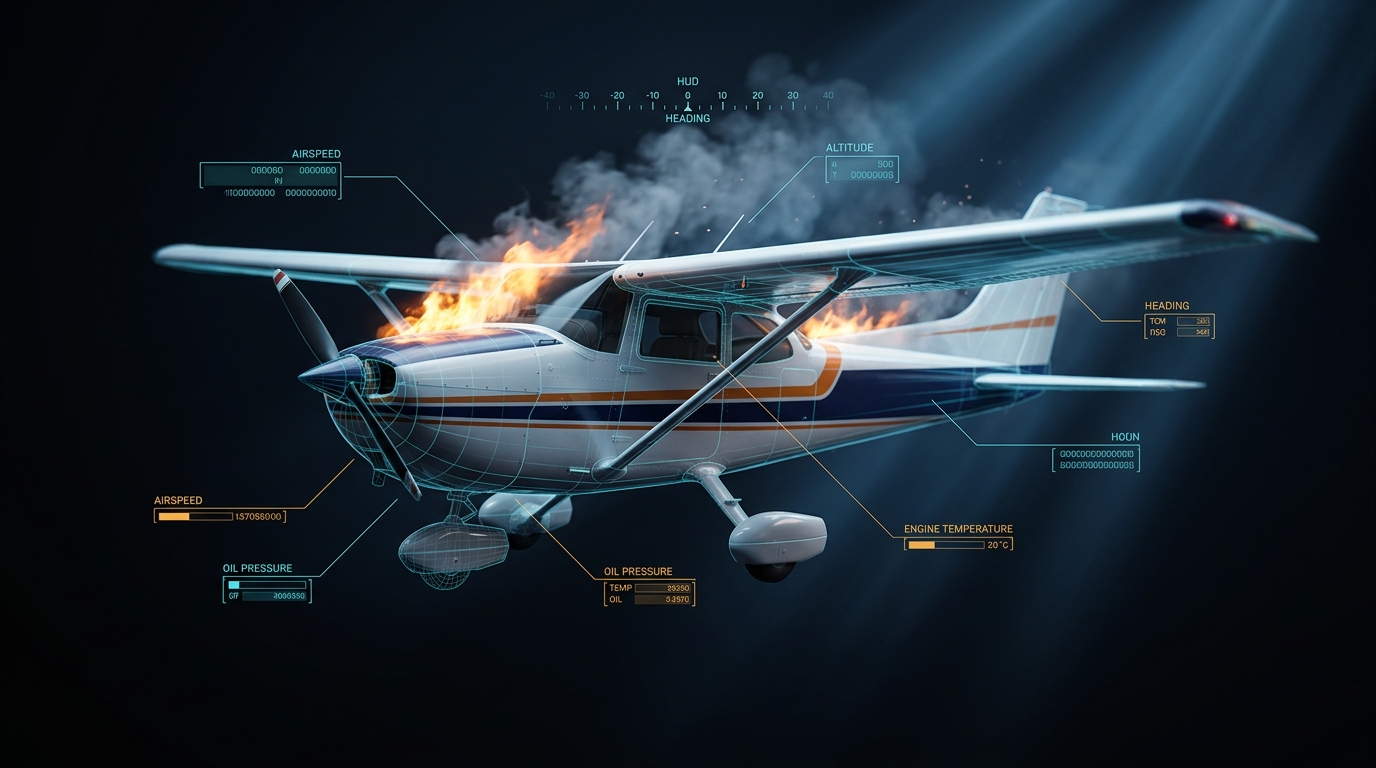
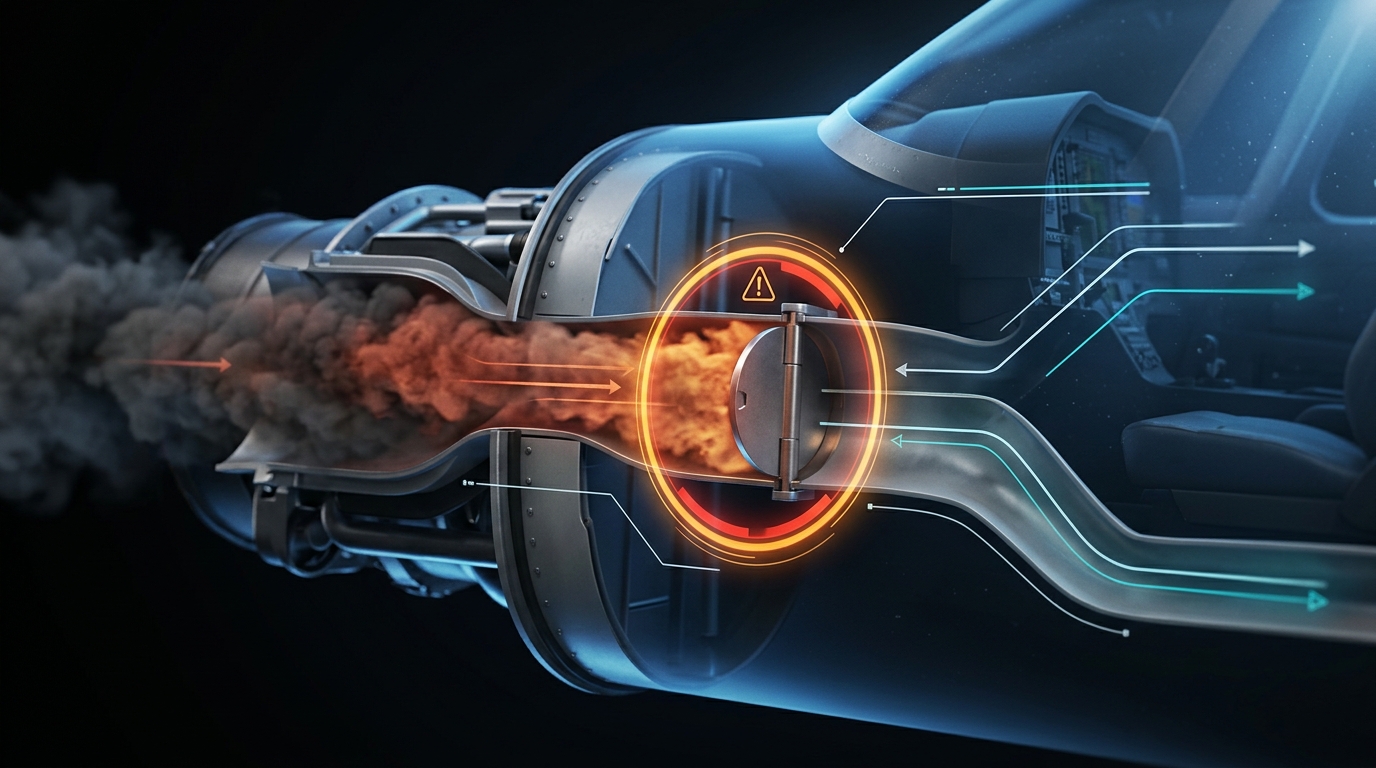
An engine compartment fire is usually well developed by the time you notice it. Unless the flight manual says otherwise, the first step is to shut off the fuel supply to the engine, and not to restart it if the flames go out (Airplane Flying Handbook).
Exam Trap: Do not switch off the electrical master by reflex. Unless the fire is electrical or a crash landing is imminent, switching it off removes the panel radios and the transponder return that ATC needs to help you.
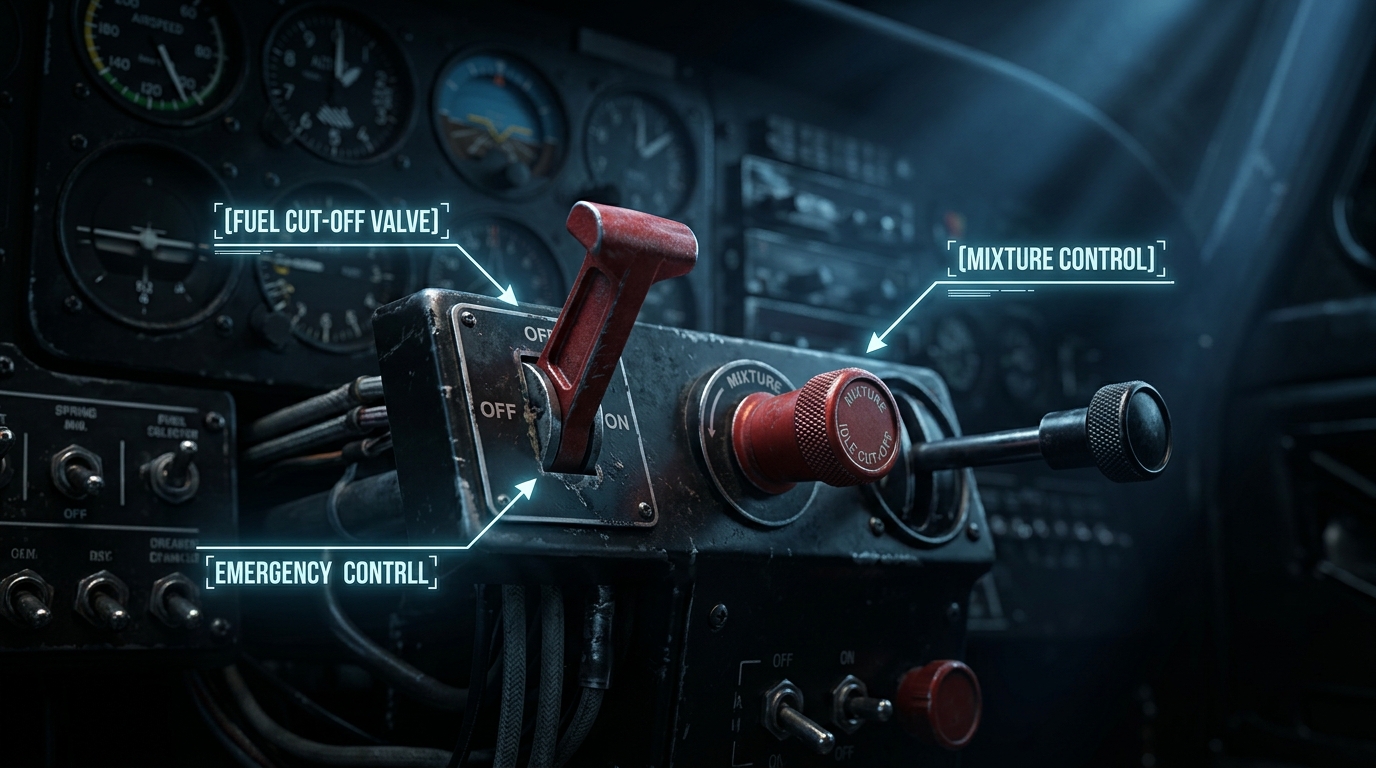
Unless the AFM/POH directs otherwise, shut off the fuel supply: mixture control to idle cut-off and the fuel selector valve to OFF. Leave the ignition on to use the fuel remaining in the lines, which may let the fire die naturally.
No. The Airplane Flying Handbook says that if the flames are snuffed out, no attempt should be made to restart the engine.
A fuel-fed fire produces bright orange flames. An oil-fed fire produces thick black smoke, and the pilot should consider stopping propeller rotation so the engine-driven oil pump stops feeding the fire.
Drill targeted FAA knowledge test questions with step-by-step mathematical decoders and regulatory clause links.
Enroll now: full Study Hub, unlimited practice tests and a study plan mapped to the ACS →