Aero Academic
FAA Ref: FAA-S-ACS-6C Area XI Task A (Night Operations)
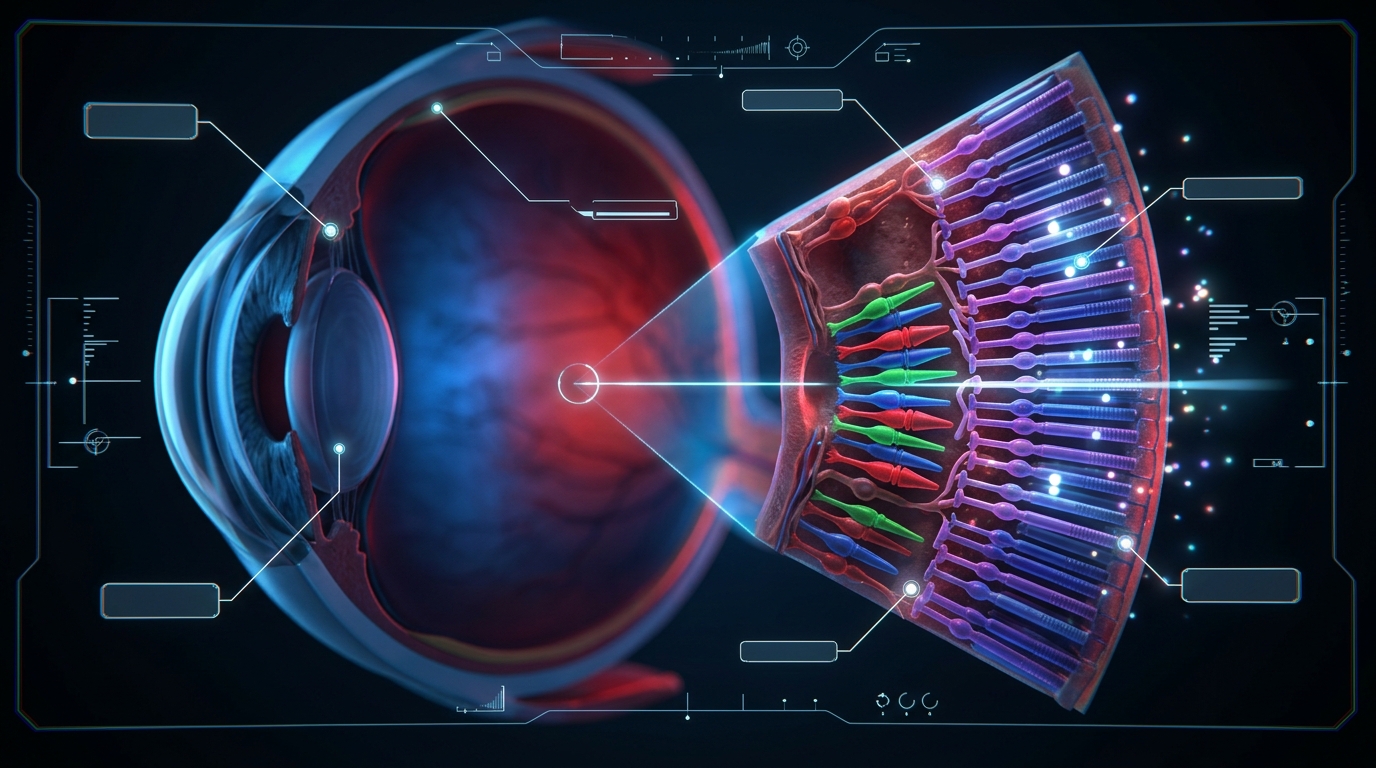
The rods that give you night vision take about 30 minutes to fully adapt to darkness, and a single bright light can destroy that adaptation. Off-center viewing and short glances keep objects visible (Pilot's Handbook of Aeronautical Knowledge).
Exam Trap: Looking straight at a faint light makes it vanish. At night the pilot should scan with the peripheral field and avoid viewing an object for longer than 2 or 3 seconds.
The rods can take approximately 30 minutes to fully adapt to darkness, and a bright light can completely destroy night adaptation.
A night scanning technique in which an object is viewed by looking about 10 degrees above, below or to either side of it, so peripheral vision can keep contact with the object.
Drill targeted FAA knowledge test questions with step-by-step mathematical decoders and regulatory clause links.
Enroll now: full Study Hub, unlimited practice tests and a study plan mapped to the ACS →