Aero Academic
FAA Ref: FAA-S-ACS-6C Area I Task H (Human Factors)
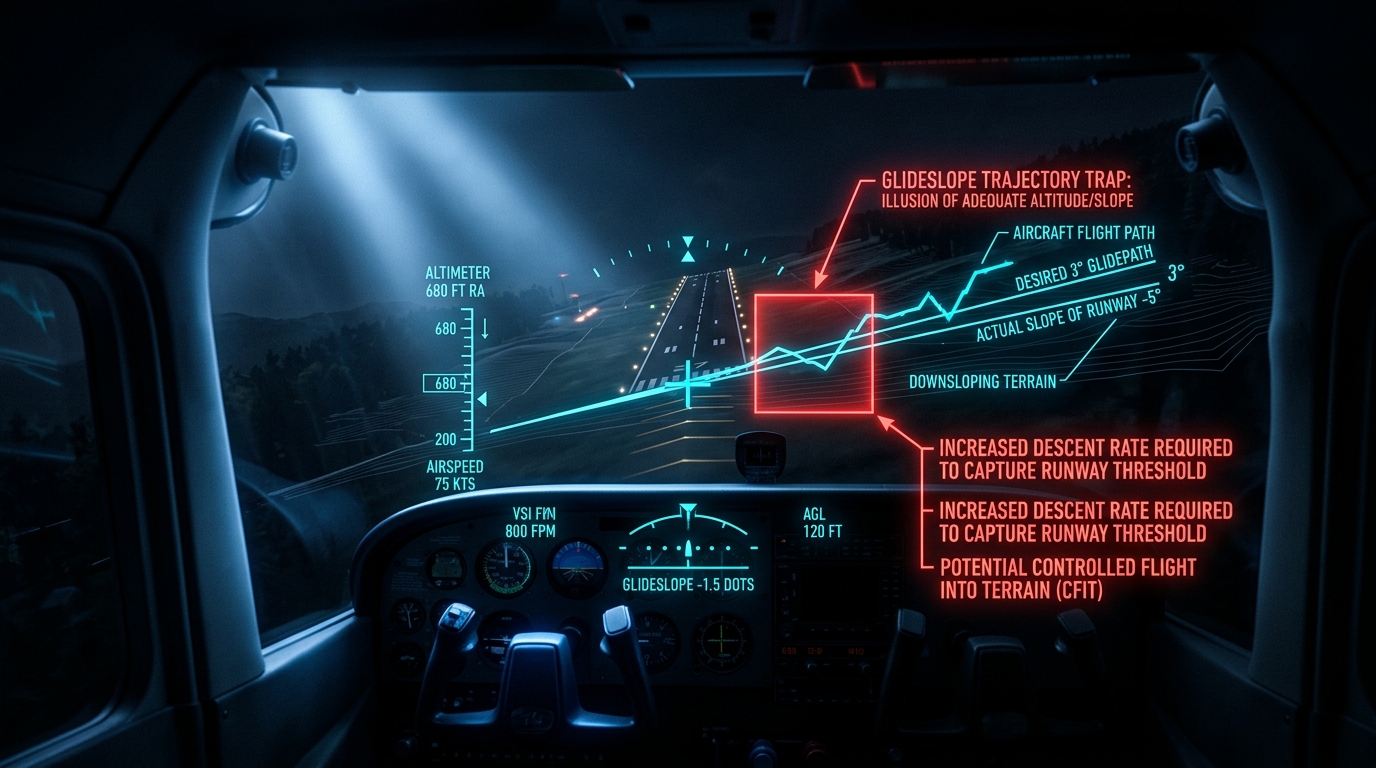
An upsloping runway or terrain makes the aircraft look higher than it is, so an unaware pilot flies a lower approach. A downsloping runway or terrain has the opposite effect (Pilot's Handbook of Aeronautical Knowledge).
Exam Trap: Learn the direction of each illusion, not just the name. Upslope looks high and leads to a low approach; downslope looks low and leads to a high approach.
It can create the illusion that the aircraft is at a higher altitude than it actually is, and a pilot who does not recognize the illusion will fly a lower approach.
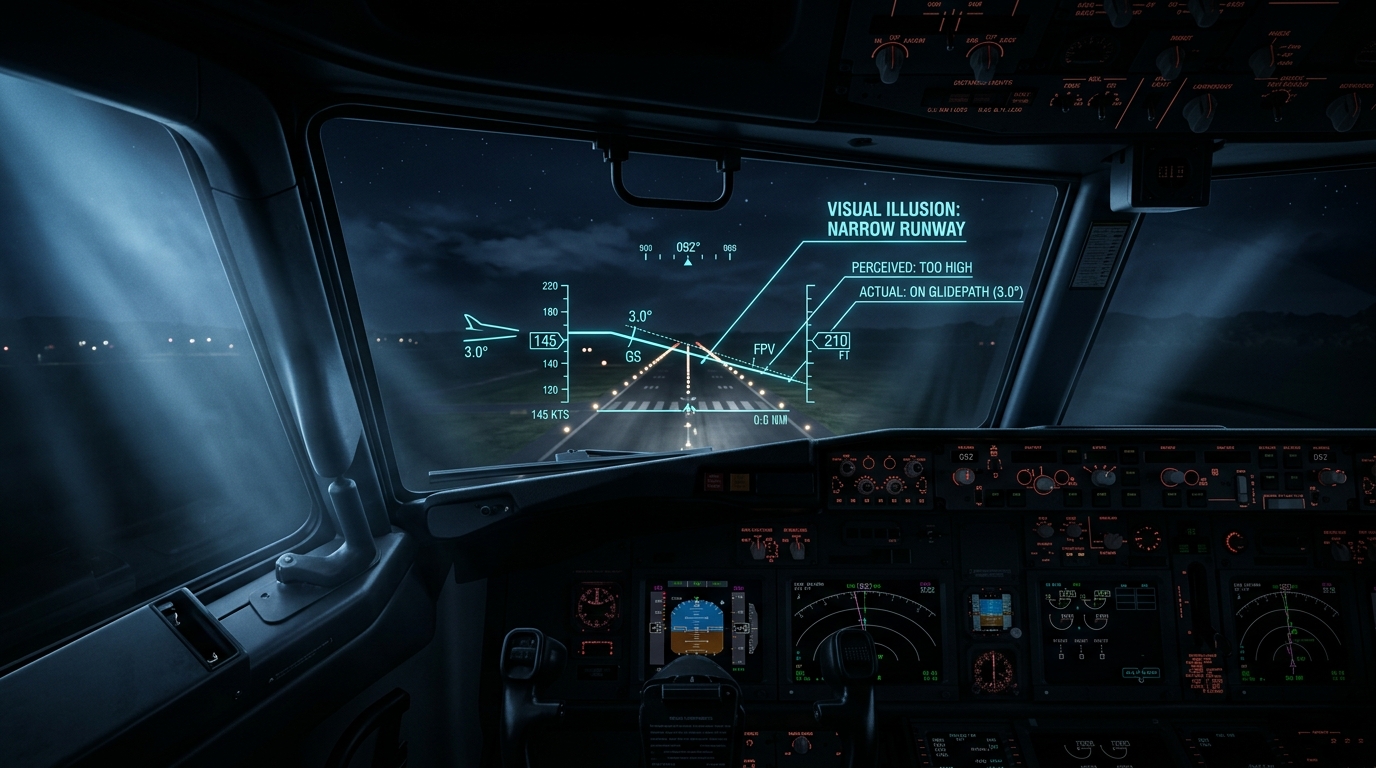
Consult airport diagrams and data before approaches to unfamiliar airports, particularly at night or in adverse weather, and use fixed, reliable visual references and instruments to check the approach path.
Drill targeted FAA knowledge test questions with step-by-step mathematical decoders and regulatory clause links.
Enroll now: full Study Hub, unlimited practice tests and a study plan mapped to the ACS →