Aero Academic
FAA Ref: FAA-S-ACS-15 Area VIII Task G (Antitorque System Failure)
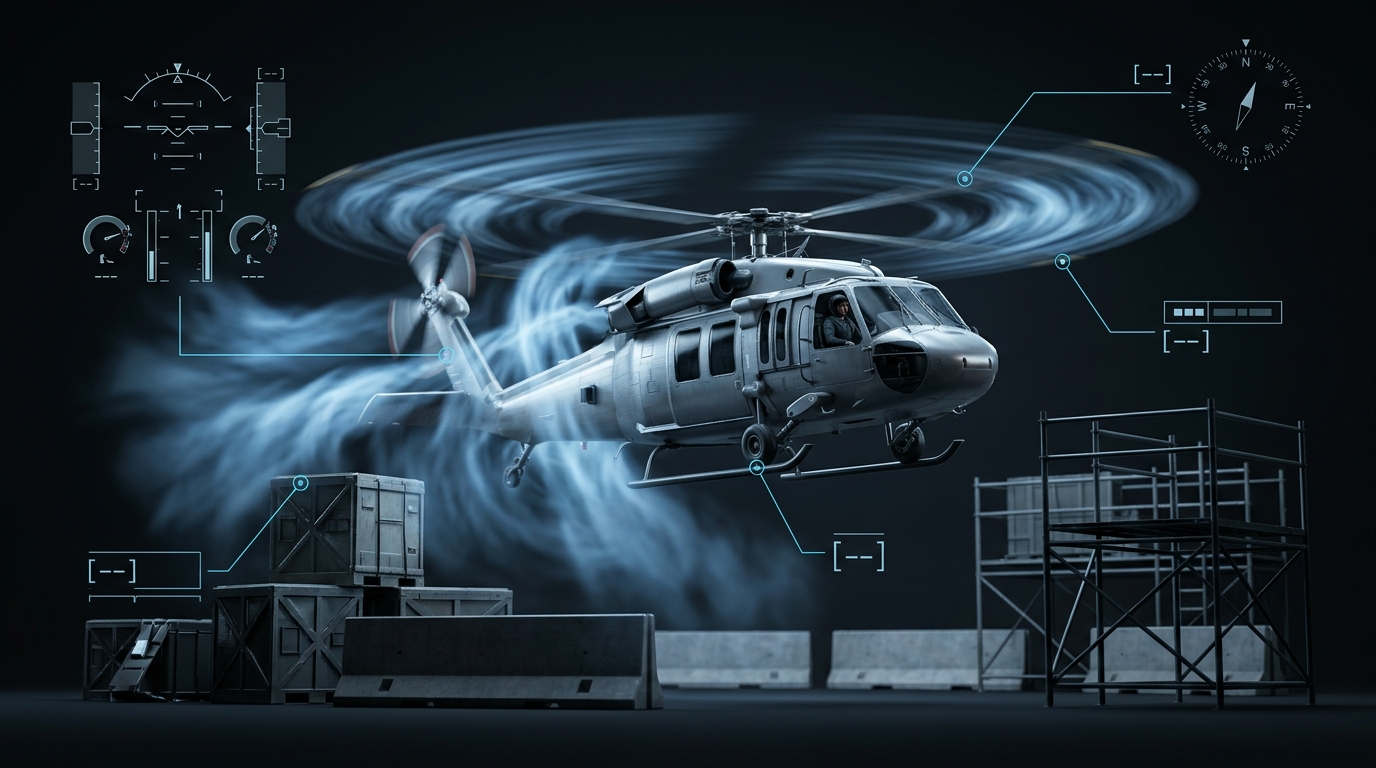
Loss of tail rotor effectiveness is an uncommanded, rapid yaw toward the advancing blade that does not subside on its own. It is an aerodynamic interaction between the main rotor and tail rotor, not a mechanical failure (Helicopter Flying Handbook).
Exam Trap: LTE is not tail rotor failure. The recovery is full left pedal, forward cyclic to gain speed and, if altitude permits, a reduction in power, while a failed tail rotor is a different emergency.
Apply full left pedal and, simultaneously, forward cyclic to increase speed. If altitude permits, reduce power. As recovery is effected, adjust the controls for normal forward flight (Helicopter Flying Handbook).
No. The handbook states that LTE is caused by an aerodynamic interaction between the main rotor and tail rotor, not by a mechanical failure.
Drill targeted FAA knowledge test questions with step-by-step mathematical decoders and regulatory clause links.
Enroll now: full Study Hub, unlimited practice tests and a study plan mapped to the ACS →