Aero Academic
FAA Ref: FAA-S-ACS-6C Area I Task F (Performance and Limitations)
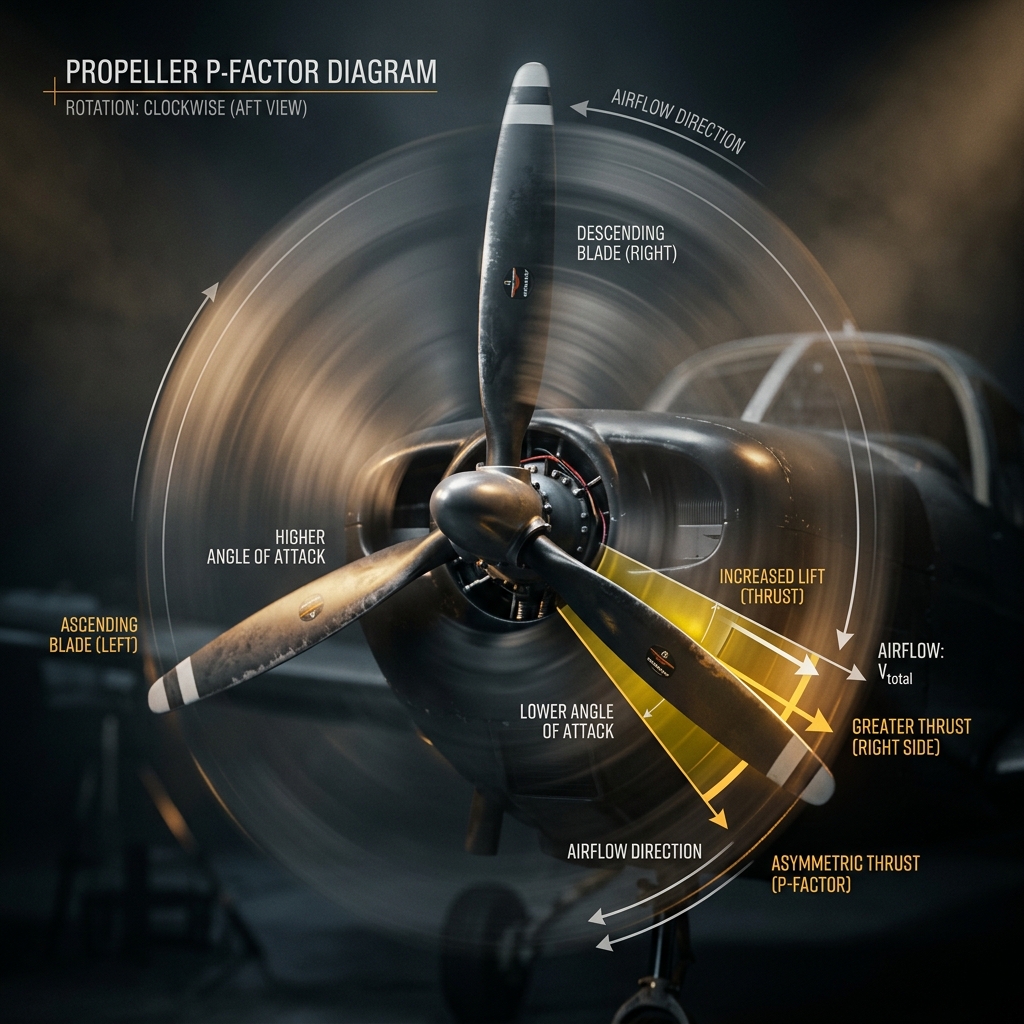
At high angles of attack, the downward-moving propeller blade produces more thrust than the upward-moving blade, yawing the airplane LEFT.
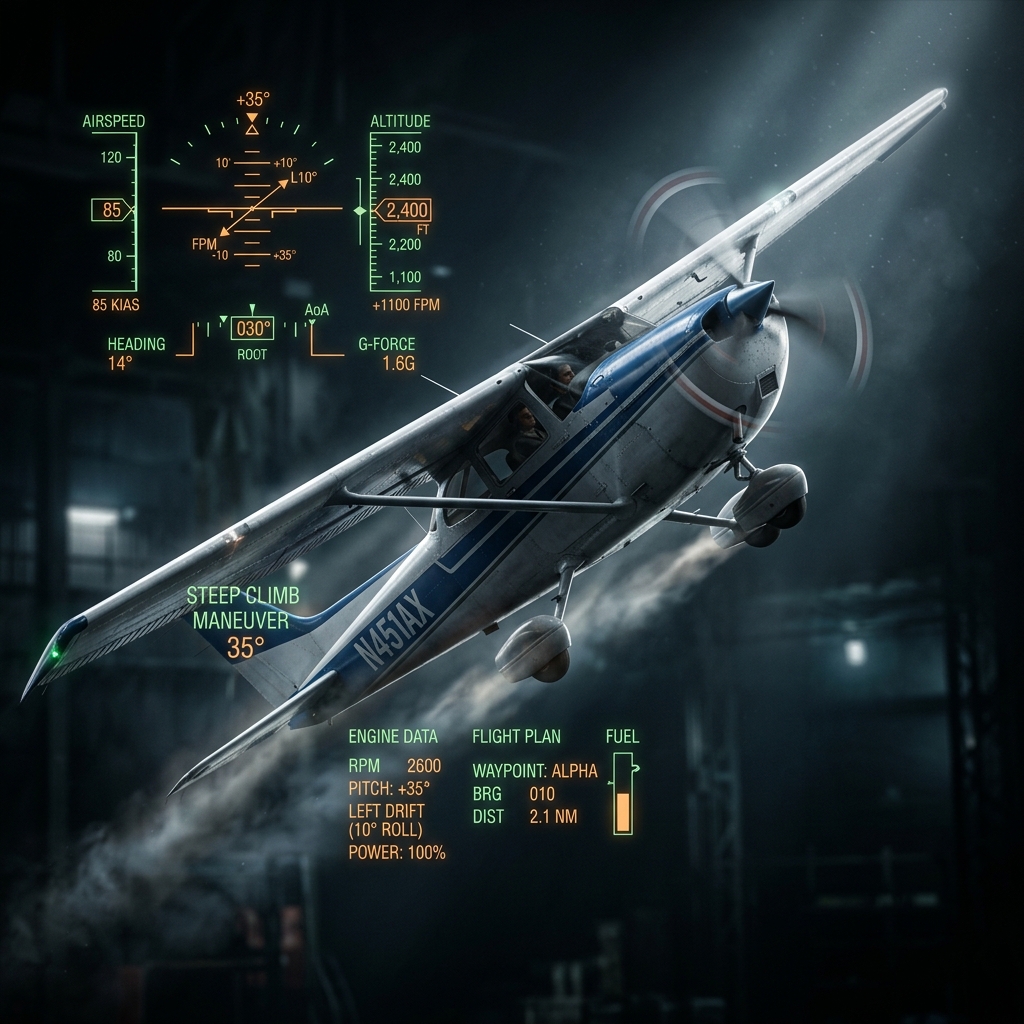
Exam Trap: P-Factor is greatest at HIGH angle of attack, HIGH power, and LOW airspeed (such as climb-out or slow flight).
During high power, low airspeed, and high pitch angle of attack conditions like takeoff and climb.
Drill targeted FAA knowledge test questions with step-by-step mathematical decoders and regulatory clause links.
Enroll now: full Study Hub, unlimited practice tests and a study plan mapped to the ACS →